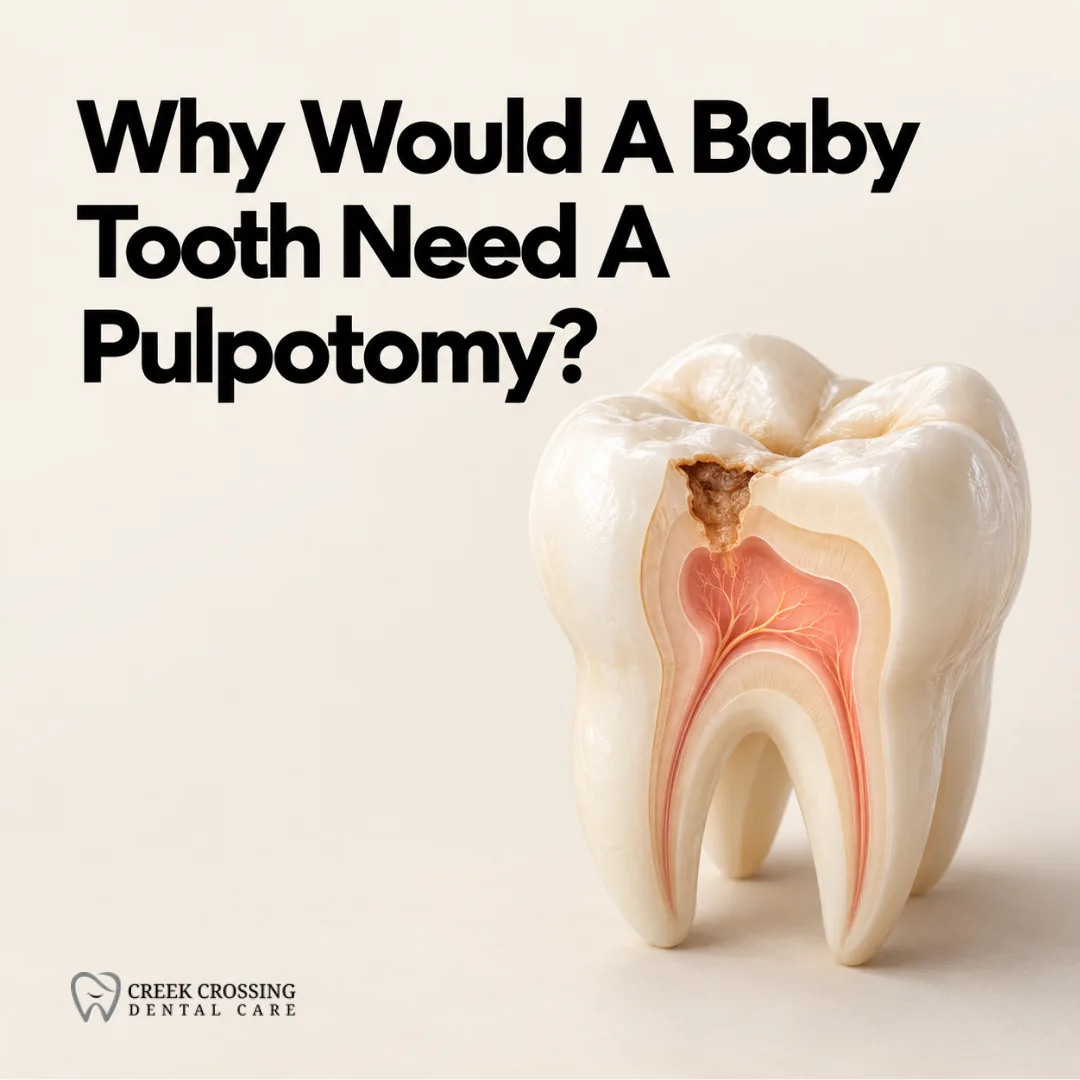
A child wakes at night with a sharp toothache. Parents cannot determine what had made the baby cry. There could be an infected tissue within the tooth that may need a pulpotomy.
A pulpotomy removes infected tissue from inside a baby tooth to save the tooth from extraction. Think of it like a small repair that keeps the tooth healthy until the adult tooth arrives.
A pulpotomy treats the inflamed or infected dental pulp inside the crown of a baby tooth. Pediatric dentists remove the damaged pulp tissue and place a medication to stop infection. The goal stays tooth preservation, not extraction.
The procedure usually takes about 30 to 60 minutes in a single visit. Clinicians often follow the pulpotomy with a stainless steel crown to protect the tooth from further decay. Parents hear the term and think of root canal therapy, but a pulpotomy differs, since it leaves the healthy root tissue intact. This approach helps maintain chewing function and space for adult teeth.
Sometimes, a baby tooth’s pulp gets hurt or infected and needs help fast. If left untreated, the problem can quickly cause pain and more serious dental issues.
Severe tooth decay can create big problems for baby teeth. Bacteria invade the tooth, breaking down its structure and reaching the dental pulp. This soft tissue houses nerves and blood vessels.
Once bacteria reach this area, they can cause pain and infection. Parents often notice their child complaining about a sensitive or painful tooth. If not treated quickly, this situation may lead to more serious issues.
A pulpotomy procedure helps save the affected tooth while keeping it in place until it falls out naturally. Dentists remove damaged pulp but leave healthy tissue intact. This approach allows the baby tooth to continue functioning properly for as long as needed.
Treating severe decay early protects children's overall oral health and sets them up for success with their permanent teeth later on.
Dental trauma can create big problems for baby teeth. A hard fall or bump can crack a tooth and expose the dental pulp inside. This soft tissue contains nerves and blood vessels, which keep the tooth healthy. Once exposed, it becomes vulnerable to infection and pain.
If this happens, a pulpotomy may be necessary to save the tooth. The dentist removes the damaged pulp to stop further issues. They then seal the tooth to protect it from bacteria. Treating these injuries promptly helps preserve oral health in young children while avoiding more complex procedures like root canal or even extraction down the road.
A pulpotomy can help keep a baby tooth healthy and functional. This procedure provides significant advantages for children's dental health.
These benefits make pulpotomies an excellent option for addressing issues with baby teeth effectively and compassionately.
A pulpotomy is a dental procedure that removes the infected pulp from a baby tooth. This helps save the tooth and keeps it healthy until it falls out naturally.
If your child has severe decay or an infection in their baby tooth, a pulpotomy can help relieve pain and prevent further issues. It protects the surrounding teeth and promotes better oral health.
Yes, a pulpotomy is generally safe for kids. Dentists use local anesthesia to minimize discomfort during the procedure. The goal is to keep your child comfortable while treating their dental issue.
Look for signs like persistent pain, swelling around the gums, or sensitivity to hot and cold foods. If you notice these symptoms, it's best to consult with your dentist right away to see if a pulpotomy is necessary.
Reading about it only gets you so far — if something hurts or you're overdue for a visit, we can help today.
Tell us a little about what you need — we'll be in touch shortly.
1927 FAITHON P LUCAS SR BLVD Ste 120 MESQUITE TX 75181-1698, United States

Hi! I'm Tooth fairy! Your AI Assistant Ask me anything