Many people find a filling falls apart when a cavity grows too large. They feel pain, worry, or just plain fed up with constant repairs.
An inlay or onlay can save more of the tooth than a crown. These restorations fit like a puzzle piece and strengthen the tooth. Here you will know when a large cavity needs one, what to expect, and which materials work best.
Inlays and onlays act like puzzle pieces for broken teeth. Dentists use them to fix bigger holes that regular fillings cannot handle.
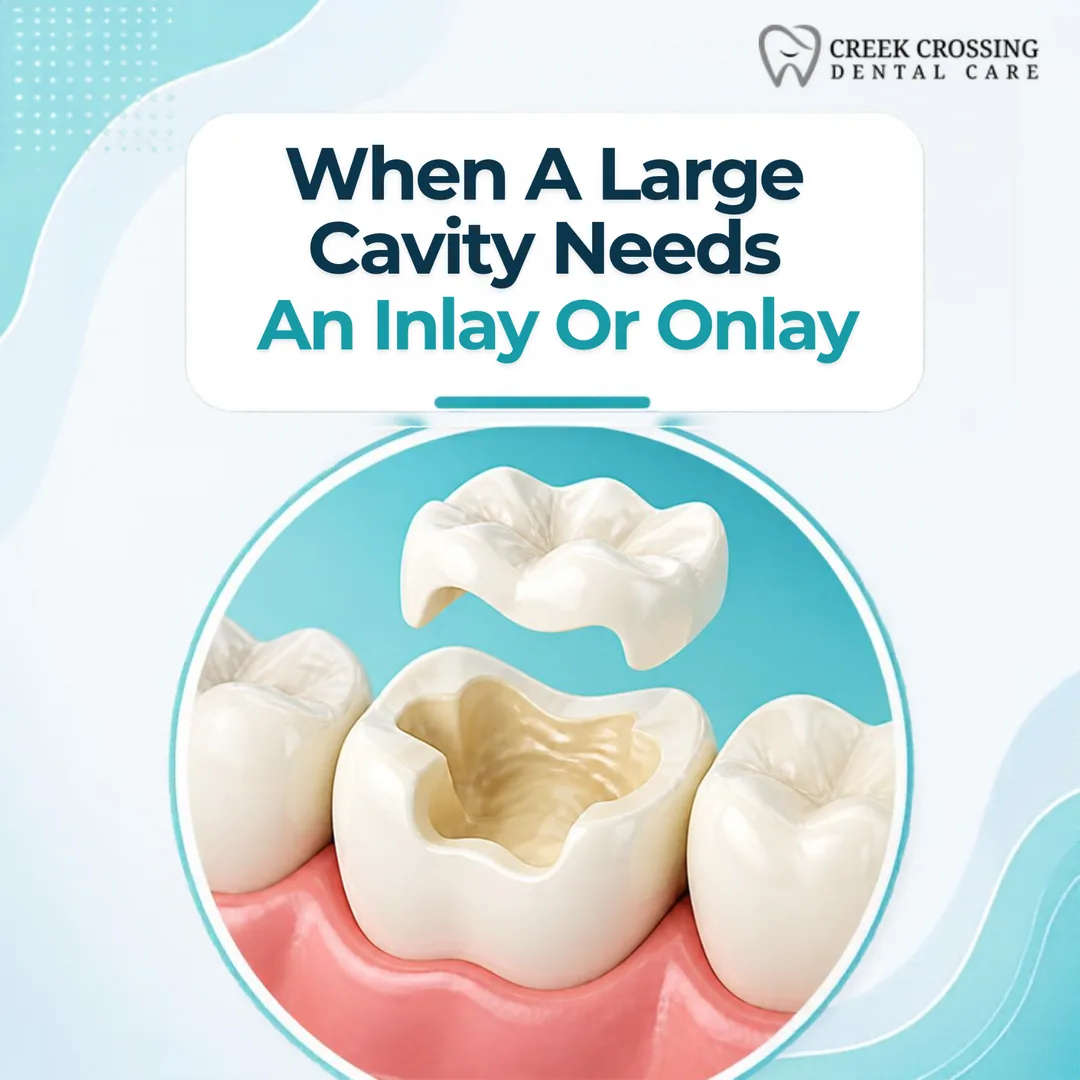
A dental inlay fits into a cavity on the top surface of a tooth. Dentists pick it when a filling will not hold. It restores the chewing surface and seals decay.
Lab-made pieces come from porcelain, composite resin, or gold. The dentist bonds the inlay for a tight seal and added strength. Patients get a cosmetic, durable restoration that preserves tooth structure.
Onlays serves as a popular option for dental restoration. They fit over the biting surface of a tooth, covering larger areas and providing more support than standard fillings. Dentists often recommend onlays when cavities extend beyond what fillings can handle.
These restorations use durable materials like porcelain or gold, which blend well with natural teeth. Onlays help restore strength to damaged teeth while keeping the original structure intact. Many patients enjoy their appearance too; they look seamless and natural in the mouth.
A large cavity can need an inlay or onlay when it surpasses the size that typical fillings can handle. Sometimes, these dental solutions serve as excellent alternatives to crowns, giving teeth a new lease on life.
Cavities that grow too big for simple fillings often require more attention. Regular fillings might not hold up well against a large cavity. They can wear down quickly or break easily. This situation calls for an inlay or onlay, which provide stronger support.
Patients frequently find themselves surprised by how much damage a cavity can cause. It may start small but expand and weaken the tooth significantly. In such cases, dentists recommend inlays or onlays as reliable solutions for restoration. These methods restore the tooth's shape and strength while improving oral health overall.
Crowns often seem like the go-to option for restoring damaged teeth. However, inlays and onlays provide a great alternative. They can repair cavities that are too large for regular fillings but do not need a full crown. These options preserve more of the tooth's natural structure while still offering strong support.
Choosing inlays or onlays also means less invasive procedures than crowns require. Dentists usually recommend them to maintain oral health without compromising strength or durability.
This approach can lead to better long-term results for dental restoration and tooth repair, making them an appealing choice for many patients facing significant cavity damage.
Inlays and onlays offer great benefits for dental restoration. They provide durability that lasts through years of chewing, making them a strong choice for tooth repair.
Inlays and onlays offer impressive durability. They often last longer than traditional fillings, making them a smart choice for large cavities. Patients can enjoy their restored teeth for many years with proper care.
These restorations withstand daily wear and tear well. They resist cracking and chipping better than standard materials. Choosing inlays or onlays means investing in oral health that endures the test of time.
Inlays and onlays help maintain tooth structure. They cover more surface area than regular fillings. This coverage reduces the need to remove healthy tooth material during treatment. By leaving more of the natural tooth intact, these restorations promote long-term oral health.
A dentist might recommend inlays or onlays for larger cavities. These options provide extra support while keeping the original tooth strong. With materials like porcelain and composite resin, they blend well with surrounding teeth, making them a good choice for aesthetic purposes too.
Understanding how these restorations work can guide patients in their dental journey to healthier smiles and better care options.
Preserving tooth structure leads to a strong foundation for dental work. Inlays and onlays provide excellent strength and support for teeth with large cavities. These restorations fit snugly within the tooth, offering stability that standard fillings often cannot.
Patients often report feeling more confident after receiving inlays or onlays compared to traditional fillings. The enhanced durability helps resist wear from chewing forces over time.
This means less worry about future damage; patients can enjoy their favorite foods without hesitation, knowing their teeth are well-supported and protected.
Inlays and onlays come in a variety of materials, each offering distinct advantages. Patients often choose porcelain for its natural appearance or gold for exceptional strength during their dental restoration journey.
Porcelain serves as a popular material for inlays and onlays. Dentists often choose it because of its natural look. Patients appreciate how closely porcelain matches the color of their teeth. This option blends well, making dental restorations less noticeable.
Porcelain also boasts excellent durability and resistance to wear. It can withstand the pressure from biting and chewing without chipping easily. This quality ensures that patients enjoy strong support for years to come.
Other materials like composite resin or gold may also provide different benefits, but porcelain stands out for its aesthetic appeal as well as its strength.
Porcelain and composite resin both serve as popular options for inlays and onlays. Composite resin offers a versatile solution for dental restorations. This material blends well with natural tooth color, making it ideal for visible areas.
Composite resin provides excellent bonding to teeth. Its flexibility allows dentists to shape it precisely during the procedure. Many patients appreciate that this option requires less removal of healthy tooth structure compared to crowns or amalgam fillings.
A dentist can apply composite resin in layers, ensuring a strong and durable restoration. For those concerned about aesthetics, this material shines brightly; it creates seamless smiles that look completely natural and fresh!
Following the discussion of composite resin, gold serves as another option for inlays and onlays. Many people consider gold for its impressive durability. Gold can withstand significant pressure from chewing, making it an excellent choice for back teeth.
This material also offers a strong bond with natural tooth structure. Dentists appreciate gold's longevity; it often lasts longer than other materials. While some may find its color less appealing, it does provide a reliable solution.
Its unique strength helps restore function without sacrificing overall integrity during cavity treatment or dental restoration processes.
An inlay fits inside a cavity, while an onlay covers a larger area, extending over one or more cusps of the tooth. Both restore strength to damaged teeth.
If a cavity is too big for a filling but not severe enough for a crown, your dentist might recommend an inlay or onlay. They provide support and protection while preserving healthy tooth structure.
Inlays and onlays are usually custom-made from materials like porcelain or resin composite. The dentist takes impressions of your tooth to create the right fit.
Like any dental procedure, there can be risks such as sensitivity or discomfort after placement. However, these issues often resolve quickly with proper care and follow-up visits.
Reading about it only gets you so far — if something hurts or you're overdue for a visit, we can help today.
Tell us a little about what you need — we'll be in touch shortly.
1927 FAITHON P LUCAS SR BLVD Ste 120 MESQUITE TX 75181-1698, United States

Hi! I'm Tooth fairy! Your AI Assistant Ask me anything