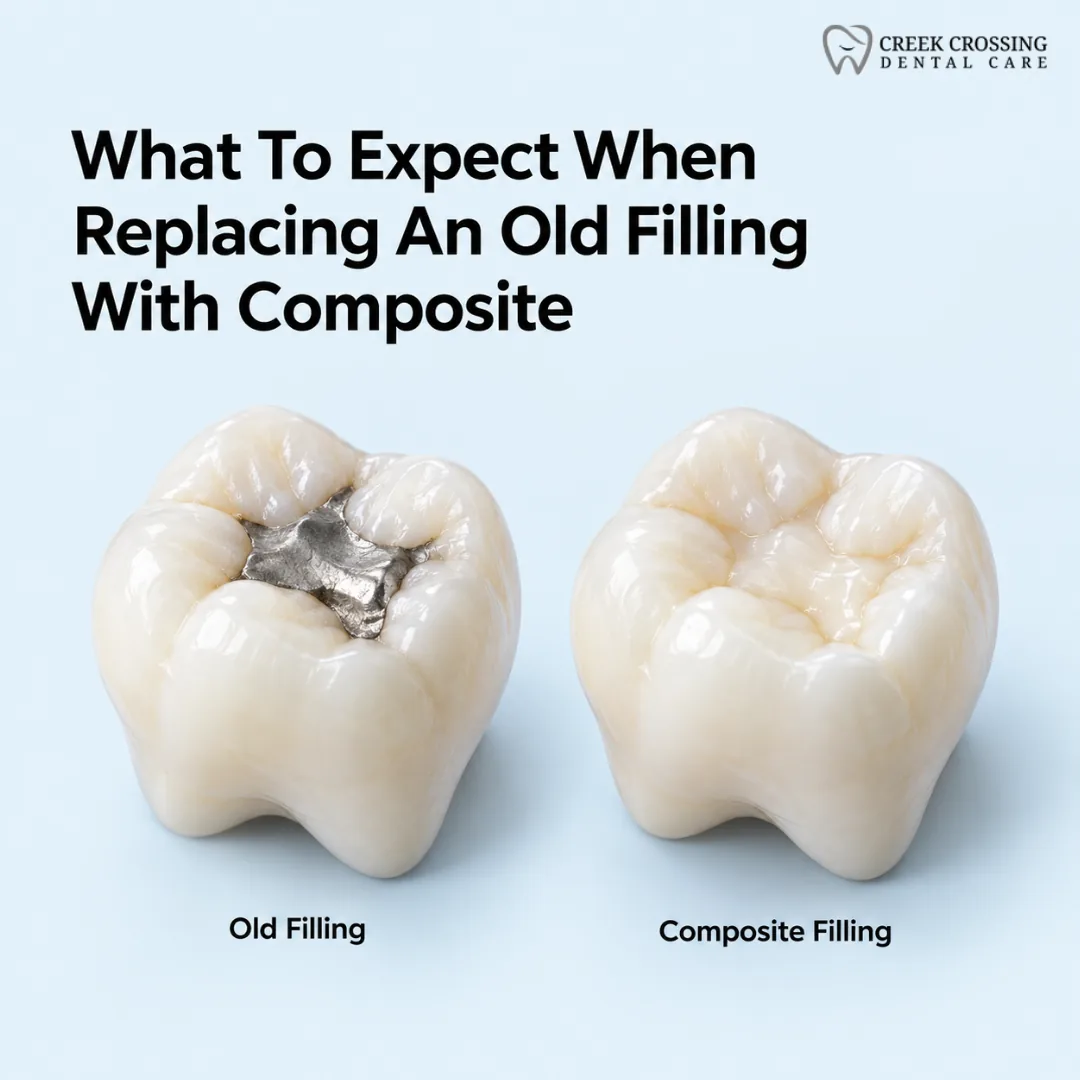
Many people feel a tap of worry when an old filling acts up. They might have a twinge of pain, more sensitivity, or see dark edges around the tooth. That can make a person wonder what comes next for their dental care.
A dentist can remove an old filling and replace it with composite, a tooth colored material that bonds to the tooth. Composite often blends in and helps restore chewing and looks. Here you will understand the steps, describe the bonding procedure, and the pros and cons.
Fillings do not last forever. If a tooth feels odd or looks different, the dentist will want to check it right away.
Sharp or dull pain can signal a failing filling or new tooth decay. The patient feels sensitivity to hot, cold, or sweet foods. Pain may strike only when chewing. That points to a crack or leaking seal around an old amalgam filling.
Dentists link this pain to worsening tooth decay and the need for filling replacement or tooth restoration.
Cold tests and gentle tapping help the dentist check the issue. The dentist removes the old filling and inspects the tooth for decay. Composite material bonds to the tooth and often reduces sensitivity. This bonding procedure restores function and improves oral health with a natural look.
Old fillings can show visible signs of wear. Cracks or chips in the filling are clear indicators that it is time for a change. These imperfections can create openings for bacteria, leading to tooth decay and other dental issues. Discoloration is another warning sign; it suggests that the material has degraded over time.
Composite materials offer an excellent solution when replacing old fillings. Unlike amalgam fillings, composite resins blend seamlessly with natural tooth color, improving appearance and boosting confidence.
Restorative dentistry focuses on function while also embracing aesthetics, making composite options popular among patients concerned about oral health and visual appeal.
Replacing an old filling involves removing the outdated material first. After that, a dentist places and bonds the composite resin to restore the tooth's strength and appearance.
Replacing an old filling is a step toward improved oral health. The removal process is essential for ensuring the success of the new composite filling.
This careful approach establishes a smooth transition to placing and bonding with composite material next.
To restore the tooth, the dentist will place and bond the composite material. This procedure improves both function and appearance.
The bonding procedure significantly enhances oral health while providing an appealing look for filled teeth. After this stage, patients can look forward to enjoying their restored smiles with confidence as they continue to learn about additional benefits of these modern materials.
Composite fillings offer a natural look that blends seamlessly with teeth. They bond strongly, providing excellent support and longevity for tooth restoration.
Composite fillings offer an aesthetic appeal that many people love. Their natural look blends seamlessly with teeth. Unlike amalgam fillings, which stand out with their metallic color, composites come in tooth-colored shades. They can match the unique hue of each person's teeth perfectly.
As a result, individuals feel more confident smiling and laughing without worrying about visible dental work. Some patients even report feeling like they have a brand-new smile after getting composite restorations.
This boost in self-esteem can significantly impact overall oral health as well; happy smiles often lead to better care routines at home. For those looking for a natural appearance in their cavity treatment, composite materials shine brightly above other filling options.
Composite fillings stand out with their strong and durable bonding. Dentists use a special adhesive to attach the composite material securely to the tooth. This bonding creates a tight seal that helps prevent tooth decay from sneaking back in.
The combination of resin and the adhesive forms a tough relationship within the tooth structure. Patients can trust these fillings to withstand daily wear and tear, just like natural teeth.
Such durability means fewer trips to the dentist for repairs or replacements, ultimately benefiting oral health.
When replacing an old filling, your dentist will first numb the area. They will then remove the old material and clean the tooth. After that, they apply a composite resin in layers, shaping it to fit perfectly.
Most patients feel little to no pain due to local anesthesia. You might feel some pressure while the dentist works, but discomfort is usually minimal.
The process typically takes about 30 minutes to an hour. It depends on how many fillings need replacing and their location in your mouth.
It’s best to wait at least two hours before eating or drinking anything hot or hard. This allows time for the material to set properly so you can enjoy your favorite foods without worry later on.
Reading about it only gets you so far — if something hurts or you're overdue for a visit, we can help today.
Tell us a little about what you need — we'll be in touch shortly.
1927 FAITHON P LUCAS SR BLVD Ste 120 MESQUITE TX 75181-1698, United States

Hi! I'm Tooth fairy! Your AI Assistant Ask me anything