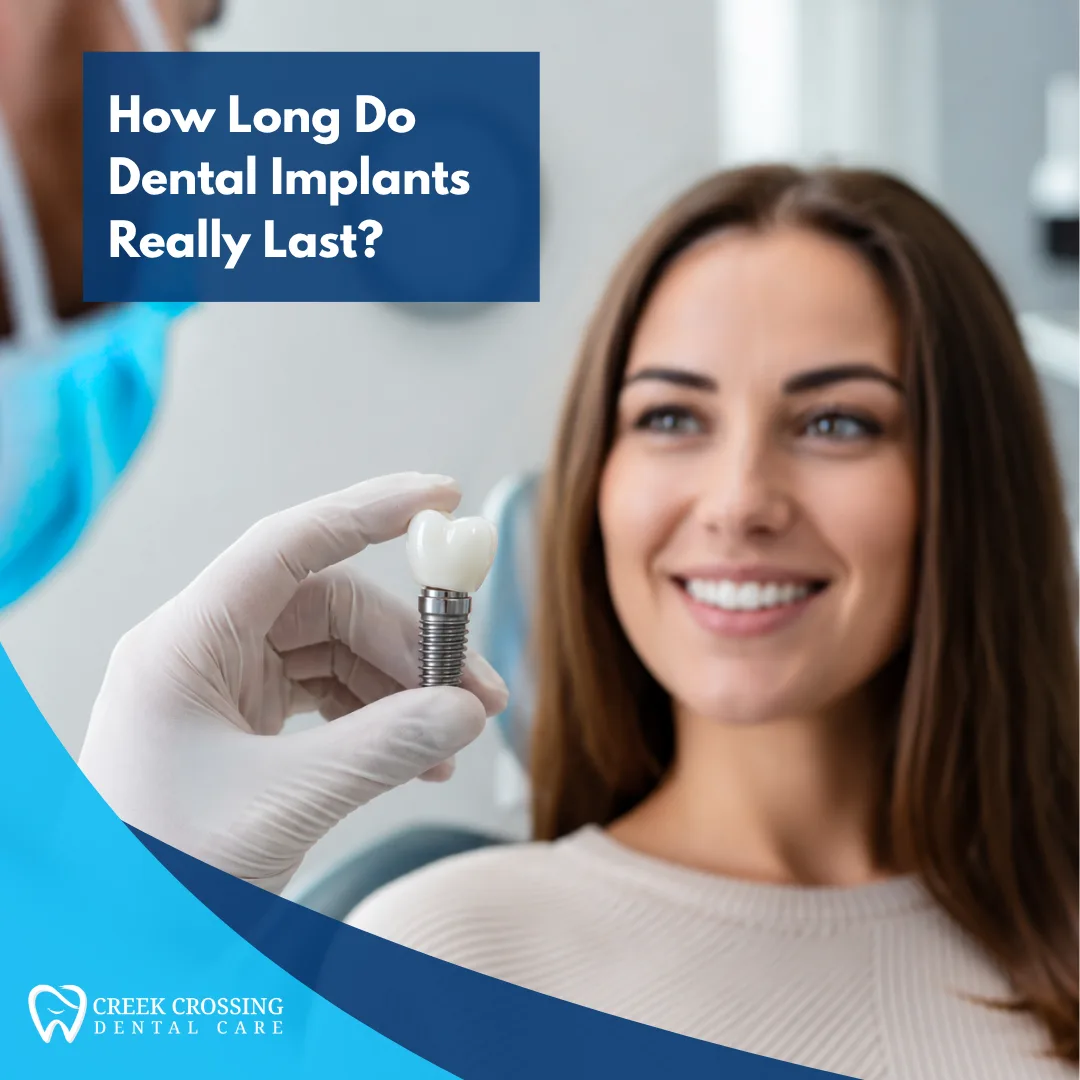
Many people wonder how long dental implants will last after they pay and heal. They worry about pain, cost, and whether the implant will fail.
Research shows implants have a success rate above 95 percent after 10 years. The implant post can last a lifetime with care. Here you will know the average lifespans, how crowns wear, and what affects longevity.
Dental implants can last for many years with proper care. Most patients enjoy strong, stable implants that may work well for decades.
Moving from average lifespans, the next section looks at how long each implant part lasts.
| Component | Typical Lifespan | Key Points, Stats, and Notes |
|---|---|---|
| Implant post (titanium or zirconia) | Can last a lifetime |
|
| Abutment (connector piece) | Often lasts many years |
|
| Crown (visible tooth) | 10 to 15 years typical; some last 15 to 20 years |
|
Proper oral care plays a major role in how long implants last. Healthy habits and regular dental check-ups keep issues at bay, maximizing the durability of these replacements.
Oral hygiene plays a crucial role in the longevity of dental implants. Regular brushing and flossing help maintain oral health, preventing gum disease. Patients must visit their dentist for routine check-ups to ensure proper maintenance of their dental implants. A successful implant has over a 95% success rate after ten years with appropriate care.
The care provided by patients greatly impacts the lifespan of implants. The average lifespan ranges from 10 to 30 years. Good maintenance can allow the implant post to last a lifetime, while crowns typically need replacement every 10 to 15 years due to wear and tear.
Some crowns may last between 15 and 20 years before they require replacement. Keeping up with oral hygiene ensures that many patients enjoy their dental implants for more than 25 years, often lasting a lifetime as part of effective tooth replacement solutions.
Good oral hygiene plays a crucial role in the longevity of dental implants, but overall health and lifestyle habits also matter. A person's general well-being directly affects how well their body heals after implant procedures.
Patients with chronic illnesses may face more challenges during the healing process. Conditions such as diabetes can impede healing and increase the risk of implant failure.
Lifestyle choices significantly influence dental maintenance as well. Smoking often leads to complications that affect implant durability. Research shows that individuals who smoke have a higher rate of implant failure compared to non-smokers.
Nutritious diets rich in vitamins support better healing, while poor eating habits may hinder recovery and overall oral health. With proper care and healthy habits, patients can enjoy their dental implants for 15 years or longer; many even keep them for life.
Dental implants can fail at times, even though they often last many years. Several signs indicate it might be time for a replacement.
Recognizing these symptoms is essential for maintaining good oral health and ensuring successful longevity with implants.
Dental implants can last between 10 to 15 years or even longer with proper care and maintenance.
Factors include oral hygiene, bone health, smoking habits, and regular dental check-ups.
Yes, you can extend their life by practicing good oral hygiene and visiting your dentist regularly for cleanings.
Signs include pain, swelling around the implant site, or loose feeling in the implant; if you notice these symptoms, contact your dentist right away.
Reading about it only gets you so far — if something hurts or you're overdue for a visit, we can help today.
Tell us a little about what you need — we'll be in touch shortly.
1927 FAITHON P LUCAS SR BLVD Ste 120 MESQUITE TX 75181-1698, United States

Hi! I'm Tooth fairy! Your AI Assistant Ask me anything