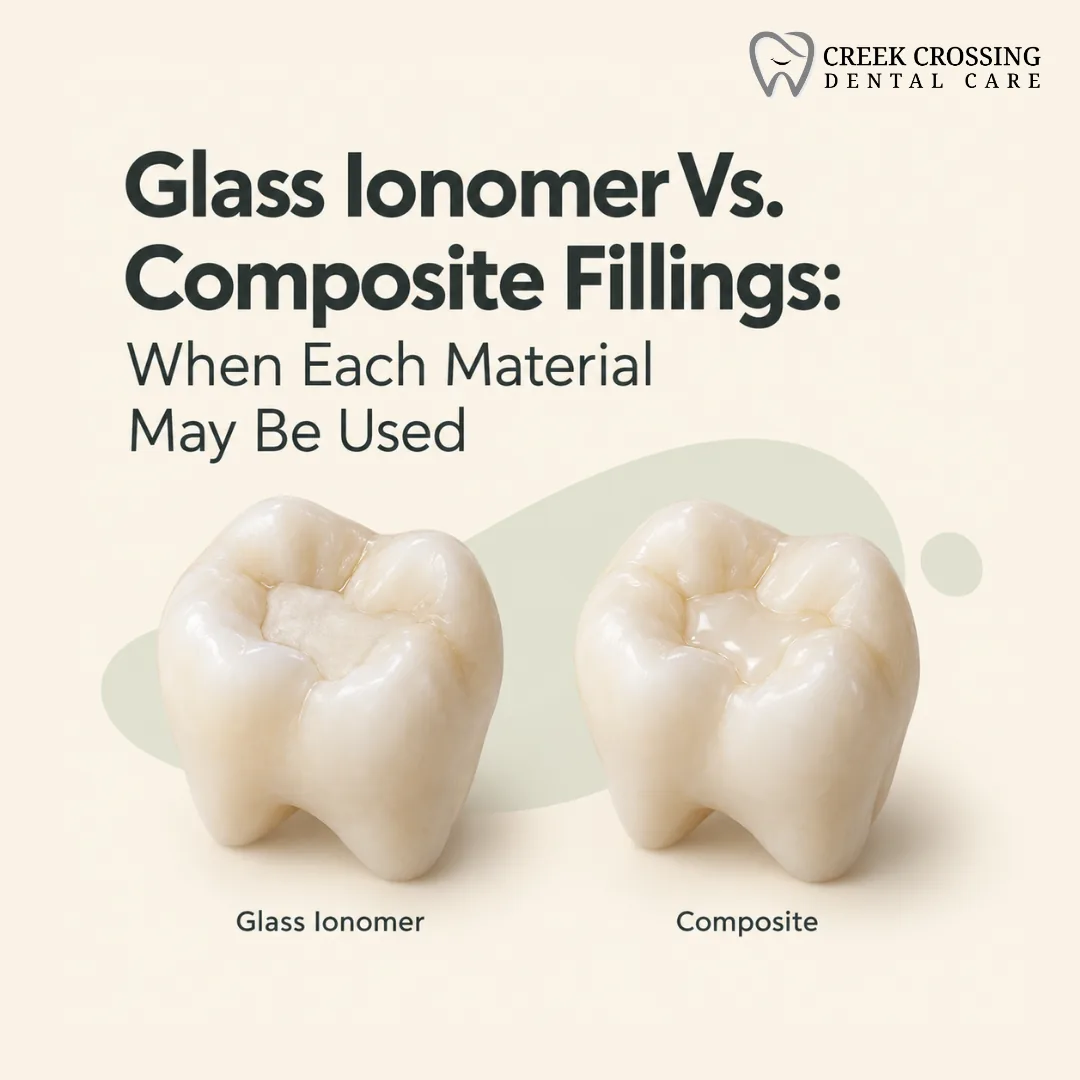
Many people face a small but nagging problem. They need a filling and do not know which material to pick, glass ionomer or composite. Parents worry about baby teeth. Adults worry about looks and strength. Dentists weigh decay risk, chewing pressure, and cost.
One clear fact helps. Glass ionomer releases fluoride, which can help stop decay. Composite looks more like a tooth and handles chewing pressure better. Here you will know about durability, fluoride benefit, appearance, and when each material fits best..
Glass ionomer fillings form from a chemical mix of glass powder and polyacrylic acid. They bond chemically to enamel and dentin and release fluoride over time. The material dates back to 1969, when researchers Wilson and Kent introduced the first formula.
Dentists favor these fillings for pediatric care and restoration of roots and cervical lesions. They suit low chewing pressure areas and work well as liners or temporary restorations. Glass ionomer works fast and tolerates slightly moist conditions. Clinics use it for small cavities in baby teeth and for patients who cannot sit long.
The material shows lower wear resistance than composite, but its fluoride release helps slow decay in high-risk mouths. Clinicians often combine it with composite in a sandwich technique to get strength and decay protection.
After discussing glass ionomer fillings, attention moves to composite fillings. Dentists call them tooth-colored resin restorations. They consist of a plastic matrix filled with glass or ceramic particles.
The material bonds to the tooth surface. Clinicians use composites in restorative dentistry for visible teeth. The color match hides cavities and older fillings. Placement takes skill and dry conditions.
Composites do not release fluoride. They suit small to medium cavities and aesthetic dentistry. They resist moderate chewing pressure but can wear faster than some other materials.
Glass ionomer fillings shine with their ability to release fluoride, while composite fillings stand out for their strength and aesthetic appeal. Each material has its strengths and weaknesses.
Durability and strength are crucial factors in choosing fillings. Glass ionomer fillings have decent strength, but they can wear down faster than composite ones. They work well for areas that do not face much chewing pressure. For kids getting dental care, glass ionomers release fluoride, which helps prevent decay.
Composite fillings shine in terms of durability. Their strength makes them suitable for molars that endure a lot of force while chewing. With their fantastic wear resistance, composite materials often last longer than glass ionomers. Many dentists recommend composites when patients want longevity and toughness in their dental restorations.
Strong materials like Glass Ionomer and Composite Fillings have unique benefits in terms of fluoride release. Glass Ionomer fillings contain fluoride, which helps fight tooth decay. This constant release can protect teeth, especially for children prone to cavities.
Composite fillings lack significant fluoride properties but offer other advantages. They blend well with the natural tooth color and are strong enough to withstand chewing pressure.
In contrast, they do not provide the same level of decay prevention as Glass Ionomer. Each option has distinct strengths that cater to different dental needs, ensuring better overall oral health for patients.
Aesthetic appearance plays a big role in choosing dental fillings. Glass ionomer fillings come in shades that match natural teeth, making them less noticeable. They work well for front teeth and pediatric patients who may need to keep smiles bright without obvious repairs.
Composite fillings also offer great aesthetics. These materials can be color-matched precisely to blend with existing teeth. Patients often appreciate their natural look, especially for visible areas. Composite fillings provide a seamless finish, giving people the confidence to smile widely after treatment.
Glass ionomer fillings excel in specific situations. They work well for patients who need decay protection while maintaining strong bonds with their teeth. Dentists often choose glass ionomer for pediatric patients.
Children tend to experience cavities more frequently, and these fillings help seal the tooth and release fluoride. The fluoride shields against further decay.
These materials also suit areas not exposed to heavy chewing pressure, like the front teeth or small cavities. Their ability to adhere directly to the tooth structure enhances their appeal in restorative dentistry.
Choosing glass ionomer can be a smart move when aesthetics take a backseat but durability remains important. It’s essential now to explore when composite fillings shine brightest and how they differ from their glass ionomer counterparts.
Composite fillings shine in many dental situations. They work best for visible teeth, like front ones. Patients often prefer them because they match the tooth color perfectly. This blend makes smiles look natural and appealing. For those concerned about aesthetics, composite fillings offer a great solution.
These materials are also strong enough to handle daily wear and tear. Chewing pressure can be tough on teeth, but composites withstand it well. They bond securely to the tooth structure, offering durability that lasts for years.
Dentists recommend these fillings for adults and teens needing both function and beauty in their restorative work. In cases of larger cavities or decay, composites remain a top choice due to their versatility and effectiveness against further damage.
Glass ionomer fillings are dental materials made from a mix of glass and acrylic. They bond well to teeth and release fluoride, which can help prevent decay.
Composite fillings are great for front teeth or visible areas. They match tooth color closely, making them less noticeable than other types of fillings.
Yes! Glass ionomer is often used in areas that don't experience much pressure, like baby teeth or around gum lines. Its ability to release fluoride makes it helpful in preventing further decay.
Absolutely! Dentists sometimes combine these materials for the best results based on your specific needs and the location of the filling. Each material has its strengths; using both can provide a solid solution.
Reading about it only gets you so far — if something hurts or you're overdue for a visit, we can help today.Learn more about composite fillings, glass ionomer fillings and tooth decay treatment, or get in touch below.
Tell us a little about what you need — we'll be in touch shortly.
1927 FAITHON P LUCAS SR BLVD Ste 120 MESQUITE TX 75181-1698, United States

Hi! I'm Tooth fairy! Your AI Assistant Ask me anything