Missing teeth can make daily life harder. People may hide their smile, avoid certain foods, or feel less confident.
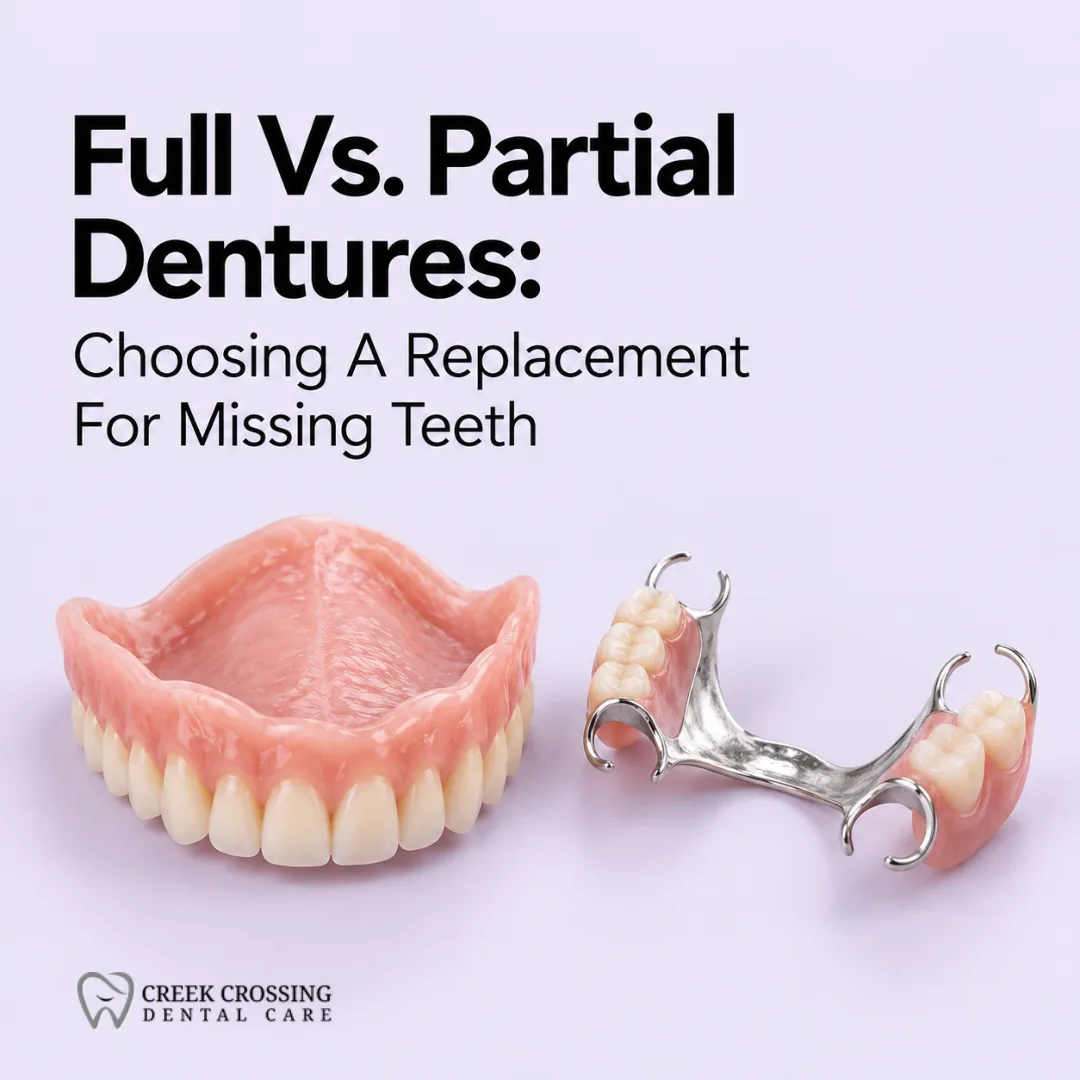
Full dentures replace all the teeth in your upper or lower jaw, while partial dentures fill empty spots between healthy teeth. The right choice gives better comfort, function, and a confident smile.
A clinician who prepared this piece has fitted dozens of patients with full dentures and seen quick changes in smile restoration. These prosthetics replace all missing teeth on an arch, restore bite alignment, and help jaw alignment after tooth loss.
Patients often report better chewing and clearer speech within weeks. Denture adhesive can boost comfort and anchorage for daily wear, and regular dental care helps protect gum support and oral health.
Partial dentures fill gaps left by missing teeth while keeping natural teeth intact. They attach to existing teeth using metal clasps or other forms of support. This design helps maintain the dental arch and bite alignment for better comfort.
People who have experienced tooth loss often find partial dentures a convenient solution. For instance, a patient had two missing molars. She opted for partial dentures to replace them without losing her healthy teeth.
The result? A restored smile that allowed her to eat all her favorite foods again! Partial dentures play an essential role in preserving oral health and enhancing aesthetics while providing a cost-effective alternative to other tooth replacement options.
Choosing between full and partial dentures can feel like a puzzle. The extent of tooth loss plays a big role in making the right choice.
Tooth loss can vary from person to person. Some people lose only a few teeth, while others may face complete tooth loss. For those missing all their teeth, full dentures offer a solid solution.
These prosthetics restore the entire dental arch and help with daily functions like eating and speaking.
On the other hand, partial dentures work best for individuals with some natural teeth remaining. They fill in gaps without removing existing teeth. This option maintains bite alignment and supports gum health.
Choosing between these options largely depends on how many teeth are gone and which type suits one’s dental needs best.A patient lost several molars but kept her front ones; she found that partials fit her lifestyle perfectly!
Costs and upkeep vary by denture type.
| Category | Full Dentures | Partial Dentures |
|---|---|---|
| Initial Cost | Lower lab costs for simple sets. More for premium fits. The clinic quoted clear price tiers. Patients often choose midrange options. | Less expensive when few teeth are missing. Metal clasps can raise the price. A local dentist preferred acrylic frameworks for budget cases. |
| Adjustments | Often need several visits after extraction. Sore spots arise as the jaw heals. The provider franked that quick tweaks ease comfort. | Fewer visits if natural teeth are stable. Minor tweaks fix fit issues. Clinicians reported quick turnarounds in many cases. |
| Maintenance | Daily cleaning with denture brush matters. Overnight soaking prevents warping. Rinse after meals to remove debris. | Clean around clasps and natural teeth each day. Use interdental brushes for tight spots. Remove and soak nightly for hygiene. |
| Replacement Timeline | Replace every 5 to 7 years on average. Bone shrinkage alters fit over time. Relines can prolong use. | Parts may need repair sooner if clasps loosen. Full replacement is less common when teeth remain healthy. Relines also help here. |
| Insurance & Budget Tips | Some plans cover partial costs. Ask the insurer for itemized quotes. Clinics sometimes offer payment plans. | Partial dentures may qualify for higher coverage. Ask about lab fees and clasp options. Shop around for transparent pricing. |
Full dentures provide a complete smile makeover. They restore function and boost confidence, allowing people to chew and speak with ease.
Partial dentures fill in gaps without sacrificing natural teeth. This option promotes dental health while maintaining an attractive appearance.
Full dentures offer a complete restoration for individuals missing all their teeth. They can provide a natural appearance that boosts confidence. Users often feel like they have their old smiles back, which improves overall happiness.
Partial dentures bridge gaps left by missing teeth while keeping the natural ones intact. These prosthetics blend seamlessly into the mouth, helping users chew and speak more easily.
Functionality plays a vital role in choosing between full and partial options. Dentures should support everyday activities such as eating favorite foods or joining social gatherings without worry.
With modern advancements, many now choose dental adhesives to keep their prosthetics secure throughout the day. This added comfort makes wearing either type feel more natural than ever before!
Supporting long-term oral health matters. Full dentures cover the entire dental arch, providing support to the gums. This can prevent gum disease and other issues. They help maintain the shape of a person’s face over time, too. Without proper replacement, tooth loss can alter jaw alignment and lead to further problems.
Partial dentures fill in gaps while keeping natural teeth intact. They protect remaining teeth from shifting or overcrowding, which helps maintain bite alignment and comfort. Regular use of denture adhesive enhances stability and function during daily activities like eating and speaking. Both types play crucial roles in promoting good dental health for years to come.
Full dentures replace all missing teeth in the upper or lower jaw. They fit snugly over your gums and help restore your smile and ability to chew.
Partial dentures fill gaps when some natural teeth remain. They attach to existing teeth, providing support while keeping your smile intact.
Choosing depends on how many teeth you have left. If most of your teeth are gone, full dentures might be best. If you still have healthy teeth, consider partials for a better fit.
Yes! With practice, eating becomes easier with either type of denture; however, start with soft foods as you adjust to them, then gradually work up to harder items like apples or steak.
Reading about it only gets you so far — if something hurts or you're overdue for a visit, we can help today.
Tell us a little about what you need — we'll be in touch shortly.
1927 FAITHON P LUCAS SR BLVD Ste 120 MESQUITE TX 75181-1698, United States

Hi! I'm Tooth fairy! Your AI Assistant Ask me anything